
There’s a particular kind of tension that only casino films can deliver: the quiet, suffocating kind that builds not through explosions or chase scenes, but through glances, pauses, and the soft clink of chips on felt. Few modern films capture that feeling as precisely as Casino Royale (2006), a reboot that didn’t just revive a franchise; it reshaped it. Early in the film’s global sweep (from Madagascar to Montenegro), you’re reminded that gambling is no longer confined to smoky back rooms or Las Vegas floors. It’s a worldwide ecosystem, stretching even into spaces like 马来西亚线上赌场 (Malaysian online casinos), where risk has become both digital and deeply personal.
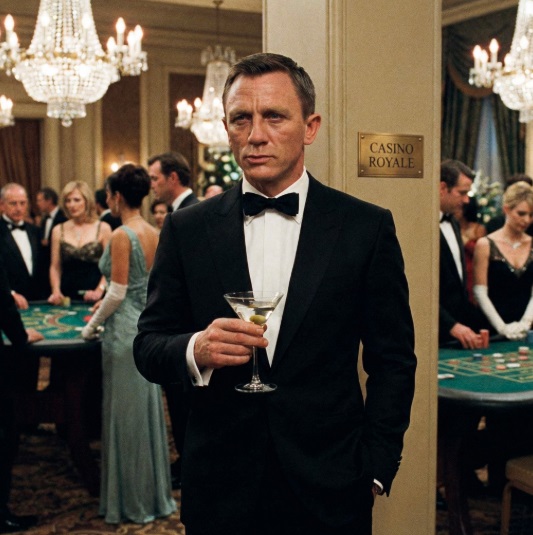
Directed by Martin Campbell, Casino Royale marks the debut of Daniel Craig as James Bond, and it does something unexpected: it strips the character down. Gone is the untouchable charm of earlier portrayals. In its place, we get a man who bleeds, miscalculates, and, crucially, learns.
A Bond film that feels grounded
At its core, Casino Royale is less about espionage gadgets and more about psychological warfare. The central conflict revolves around a high-stakes poker game at the Casino Royale in Montenegro, where Bond must bankrupt the financier Le Chiffre, a man who funds terrorism and desperately needs to recover his losses.
The setup is deceptively simple. Yet the execution is anything but.
Rather than relying on spectacle, the film leans into tension. The poker table becomes a battlefield, each hand a calculated move. What makes these scenes compelling isn’t just the money at stake, but the emotional undercurrent. Bond isn’t just playing to win; he’s playing to survive.
The evolution of James Bond
Daniel Craig’s portrayal is often described as grittier, but that undersells what’s really happening. This Bond is unfinished. He’s newly promoted to 00 status and is still figuring out what that responsibility entails. We see this in small but telling ways:
- He makes impulsive decisions that nearly cost him the mission.
- He underestimates opponents, especially Le Chiffre.
- He allows personal feelings to interfere with professional judgment.
These flaws don’t weaken the character. They make him believable. For the first time in a long while, Bond feels human.
More than a love interest
No discussion of Casino Royale would be complete without Vesper Lynd, played with remarkable subtlety by Eva Green. She isn’t just a romantic subplot; she’s the emotional centre of the film.
Their relationship develops gradually, through dialogue that feels natural rather than scripted. There’s a memorable train scene where the two size each other up with a mix of wit and vulnerability. It’s not flashy, but it’s effective.
What sets Vesper apart is her complexity. She’s intelligent, guarded, and ultimately tragic. Her presence shifts the tone of the film, turning what could have been a straightforward thriller into something more layered.
A masterclass in tension
The centrepiece of the film, the poker game, is handled with impressive restraint. Instead of overwhelming the audience with technical jargon, the film focuses on reactions, timing, and psychology.
Here’s what makes it work so well:
- Clarity: Even if you don’t fully understand Texas Hold’em, you can follow the stakes.
- Pacing: The game unfolds over multiple scenes, allowing tension to build naturally.
- Character focus: Every decision reflects personality—Bond’s aggression, Le Chiffre’s desperation.
It’s worth noting how rare this approach is. Many films either oversimplify gambling or overcomplicate it. Casino Royale finds a balance that keeps viewers engaged without talking down to them.
A visual shift for the franchise
Visually, the film represents a departure from the glossy aesthetic of earlier Bond entries. The colour palette is more subdued, the camera work more intimate.
The casino itself is elegant but not exaggerated. It feels like a real place where real money is at stake, not a fantasy playground designed purely for spectacle.
Even the action sequences, while still present, are more grounded. The opening parkour chase is energetic but believable, setting the tone for a film that prioritises realism over excess.
Strengths and weaknesses
To give a clearer picture, here’s a balanced look at where Casino Royale excels and where it stumbles:
| Aspect | Strengths | Weaknesses |
| Characterisation | Deep, human portrayal of Bond and Vesper | Some side characters feel underused |
| Pacing | Strong build-up, especially in poker scenes | Slight slowdown in the final act |
| Action | Grounded and impactful | Less variety compared to other Bond films |
| Emotional Depth | Surprisingly rich for the genre | May not appeal to fans of classic Bond escapism |
Where it stands among casino films
Compared to other casino-focused films, Casino Royale occupies an interesting space. It’s not as sprawling as Casino (1995), nor as niche as Rounders (1998). Instead, it blends elements of both, combining high-stakes gambling with character-driven storytelling.
What sets it apart is its refusal to glamorise risk. Winning doesn’t feel triumphant; it feels temporary. Loss, on the other hand, carries weight.
Why it still matters
Nearly two decades after its release, Casino Royale remains one of the most influential entries in the Bond franchise. It redefined what audiences expect from the character, paving the way for a more nuanced, emotionally complex approach.
More importantly, it showed that casino films don’t need to rely on clichés to be engaging. By focusing on people rather than spectacle, it created a story that resonates beyond the confines of its genre.
Casino Royale is not just a good Bond film. It’s a great film, full stop. It respects its audience, trusts its characters, and understands that real tension comes from uncertainty, not excess.
If you’re looking for a film that captures the true essence of gambling (the risk, the psychology, the cost), this is as close as it gets.
It doesn’t just ask whether Bond will win. It asks what winning actually means. And by the time the credits roll, the answer feels far more complicated than you might expect.